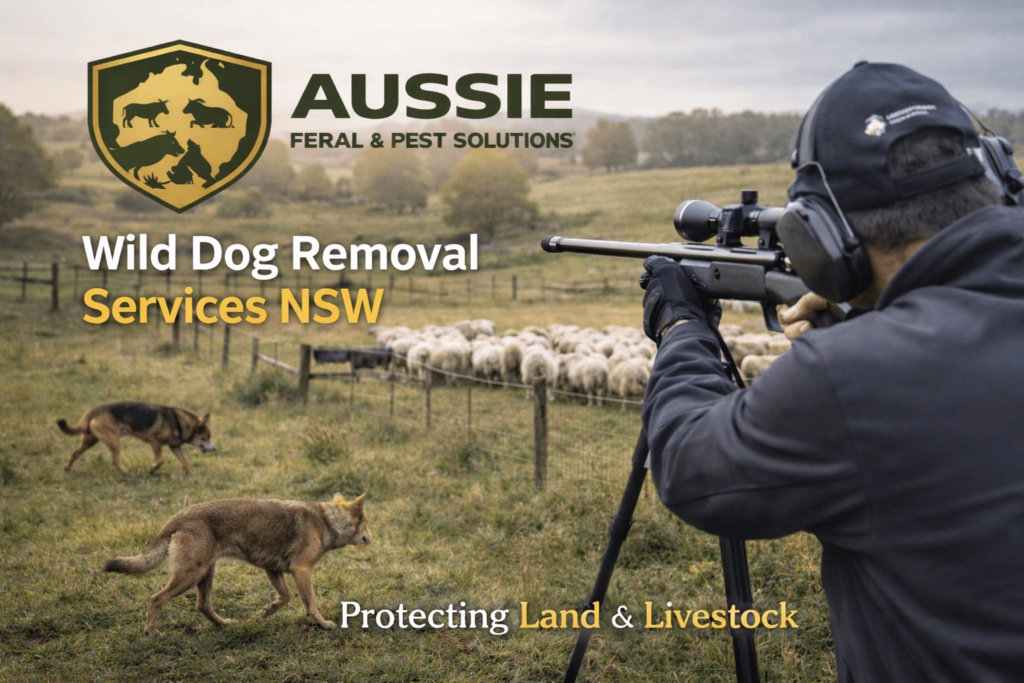
Wild Dog Management in NSW
Understanding Risks, Impacts, and Lawful Control Options
Wild dogs continue to pose a significant challenge for livestock producers across New South Wales. Their impact on sheep, goats, calves, and other stock can result in financial loss, animal welfare concerns, and long-term disruption to farm operations.
Effective vertebrate pest management relies on understanding wild dog behaviour, early identification of activity, and the application of lawful, well-planned control strategies as part of a broader rural pest management approach.
The Impact of Wild Dogs on Livestock Production
Wild dogs are highly adaptable predators. Once established in an area, they can travel long distances, target vulnerable livestock, and adjust their behaviour to avoid pressure.
Landholders across NSW commonly report:
-
Livestock losses due to predation
-
Injured animals requiring treatment or euthanasia
-
Stress-related weight loss and reduced productivity
-
Disrupted grazing patterns and increased labour demands
Without appropriate management, wild dog activity often escalates over time rather than resolving naturally.
Why Planned Wild Dog Management Is Important
Wild dog control is most effective when approached as part of a planned vertebrate pest management strategy, rather than through reactive or uncoordinated responses.
Poorly planned attempts can increase risk, reduce effectiveness, and lead to dogs becoming more cautious and difficult to manage.
Best-practice wild dog management typically considers:
-
Property layout and terrain
-
Livestock movement and vulnerable periods
-
Neighbouring land use and coordinated approaches
-
Lawful and humane control options available under NSW regulations
Lawful Control Options in New South Wales
In NSW, wild dog control may involve a combination of methods depending on location, land use, and regulatory requirements. These can include exclusion fencing, monitoring, coordinated regional programs, and—where authorised—targeted firearm-based control conducted by appropriately approved operators.
Any firearm-based activity for wild dog control must be conducted only by licensed individuals operating under the correct genuine reason and regulatory approvals, with landholder permission and in accordance with NSW law.
Responsible Approach to Rural Pest Management
Wild dog management must always be carried out with consideration for:
-
Animal welfare
-
Public safety
-
Environmental responsibility
-
Compliance with NSW firearms and animal control legislation
There is no one-size-fits-all solution. Effective outcomes depend on tailoring approaches to local conditions and integrating wild dog control into broader rural pest control services and property management plans.
Long-Term Livestock Protection
Targeted wild dog control can reduce immediate pressure on livestock, but long-term success is more likely when combined with:
-
Ongoing monitoring
-
Coordination with neighbouring landholders
-
Regional pest management strategies
-
Adaptive planning as conditions change
Early identification and planning often prevent further escalation and help protect livestock productivity over time.
When to Seek Professional Guidance
Landholders may consider seeking professional advice or support when experiencing:
-
Repeated livestock losses
-
Injured or stressed stock
-
Regular sightings, tracks, or signs near grazing areas
-
Difficulty managing wild dog activity independently
Understanding available options and planning appropriately is a key step in reducing risk and maintaining sustainable farm operations.
Wild Dog Management and Compliance
Any future involvement in firearm-based wild dog control services will commence only after all relevant NSW regulatory approvals are granted. Until then, information provided on this page is intended for educational and planning purposes only.