Feral Pig Management in NSW
Understanding Impacts, Risks, and Lawful Control Options
Any future involvement in firearm-based feral pig control services will commence only after all required NSW regulatory approvals are granted. Information on this page is provided for general awareness and planning purposes.
Feral pigs are a significant and ongoing issue for many rural landholders across New South Wales. Their activity can lead to damaged paddocks, destroyed crops, eroded creek banks, broken fencing, and increased pressure on livestock and native wildlife. Once established, feral pig populations can be difficult to manage without a planned and lawful approach.
Effective feral pig control in NSW relies on understanding pig behaviour, early identification of activity, and the application of appropriate control methods in line with NSW regulations.
Why Feral Pigs Are a Major Issue on NSW Properties
Feral pigs are highly adaptable and reproduce rapidly. Their rooting and digging behaviour impacts pasture growth, soil structure, water sources, and farm infrastructure. In addition to physical damage, feral pigs may also present biosecurity risks and contribute to disease spread affecting livestock.
Landholders commonly observe:
-
Damage to crops and pasture
-
Disturbance of dams, creeks, and waterways
-
Increased erosion and soil loss
-
Risks to lambs, calves, and native species
-
Ongoing pressure despite previous control efforts
Without ongoing planning, pig numbers can rebound quickly even after short-term reductions.
Lawful Approaches to Feral Pig Management in NSW
All feral pig management activities in NSW must be carried out lawfully and with landholder permission. Regulatory requirements can vary depending on location, land use, and control method.
Feral pig management programs may include:
-
Monitoring and activity assessment
-
Property planning and risk identification
-
Coordination with neighbouring landholders
-
Targeted control methods where lawful and authorised
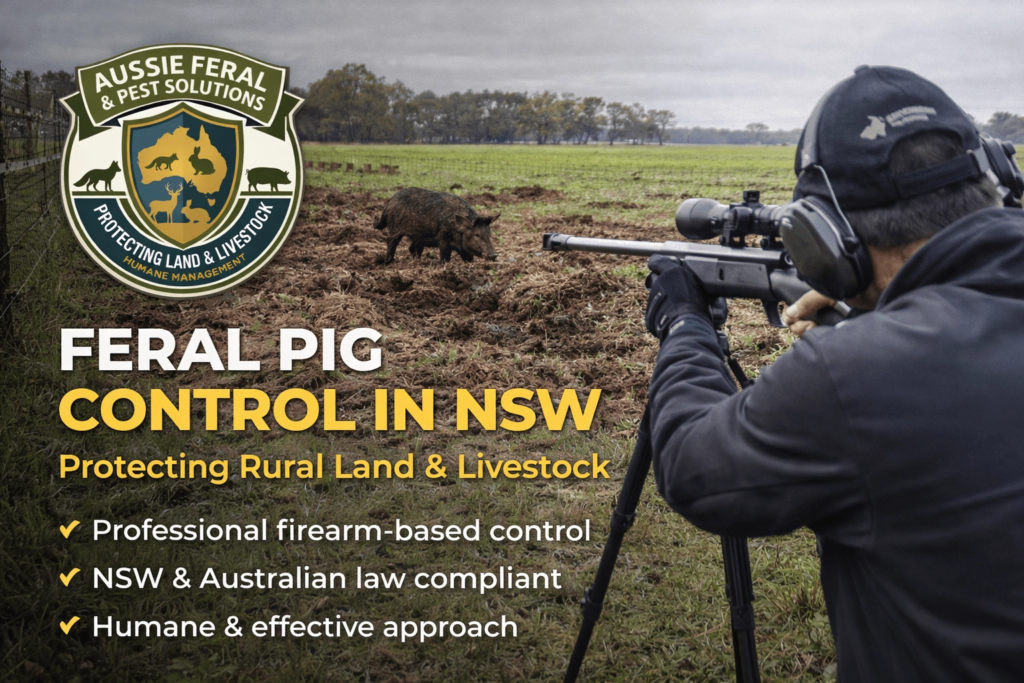
Firearm-based control, where permitted, must only be conducted by appropriately licensed and authorised individuals operating under the correct genuine reason and regulatory approvals.
Animal Welfare and Responsible Practice
Animal welfare is a critical consideration in all vertebrate pest management activities. Best-practice approaches focus on minimising unnecessary stress, avoiding non-target species, and applying humane and lawful methods consistent with NSW and Australian standards.
Responsible feral pig management considers:
-
Animal welfare obligations
-
Public and property safety
-
Environmental responsibility
-
Compliance with firearms and animal control legislation
Poorly planned or rushed activity can increase risk and reduce effectiveness over time.
Supporting Long-Term Property Management
Feral pig management is most effective when integrated into a broader property and biosecurity plan. While targeted control can reduce immediate pressure, long-term outcomes are often improved through:
-
Ongoing monitoring
-
Regional or neighbour coordination
-
Adaptive management as conditions change
Early planning and informed decision-making help reduce long-term impacts and recovery costs.
Working With NSW Landholders
Every property is different, and feral pig activity varies across regions. Landholders are encouraged to seek information and guidance to ensure any management approach is lawful, appropriate, and suited to local conditions.