Feral Animal Management in NSW: Practical, Lawful, and Responsible Approaches
Feral animals continue to place increasing pressure on farmland, livestock, and rural infrastructure across New South Wales. From crop damage and pasture degradation to livestock losses and biosecurity risks, unmanaged feral animal populations can have long-term impacts on agricultural productivity and land sustainability.
Effective feral animal management in NSW relies on practical planning, lawful methods, and responsible decision-making that considers local conditions, landholder priorities, and animal welfare responsibilities.
Understanding the Feral Animal Challenge in New South Wales
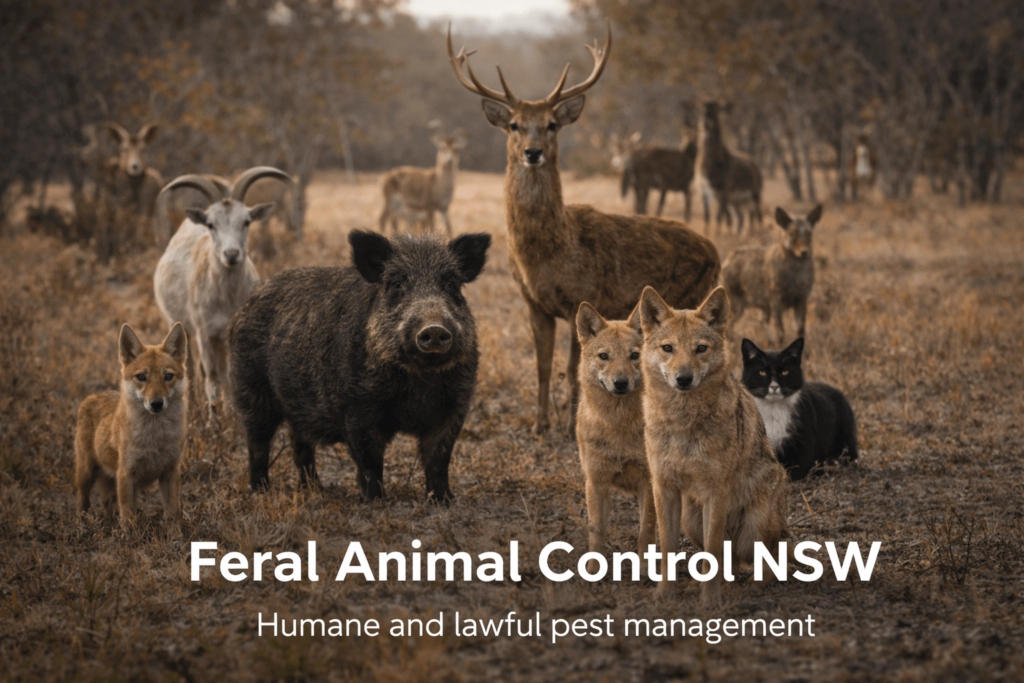
NSW is home to a wide range of invasive and feral animal species that present ongoing challenges for landholders, including:
-
Feral pigs
-
Feral deer (including fallow, red, rusa, sambar, chital, and hog deer)
-
Wild dogs and dingo hybrids
-
European red foxes
-
Feral goats
-
Rabbits and hares
These species can damage crops, compete with livestock for feed and water, erode soil, and disrupt native ecosystems. In many regions, population numbers continue to increase, making ongoing management an important consideration rather than a one-off response.
Why Feral Animal Management Must Be Planned and Targeted
There is no single solution suitable for every property. Effective feral animal management in NSW depends on:
-
The species involved
-
Property size and layout
-
Surrounding land use
-
Seasonal conditions
-
Livestock operations and farming activities
Target-specific approaches help reduce pest pressure while minimising risks to non-target animals, people, and neighbouring properties. Poorly planned actions may deliver short-term results but can create longer-term challenges.
Working Within NSW Laws and Regulations
All feral animal management activities in NSW must comply with relevant state and federal legislation. Depending on species, location, and method, specific approvals or permits may apply.
Responsible approaches involve:
-
Landholder permission and planning
-
Compliance with NSW laws and local regulations
-
Application of appropriate animal welfare standards
-
Consideration of public and property safety
Clear communication and an understanding of regulatory obligations are essential before any control activity is undertaken.
Humane and Ethical Considerations
Animal welfare is a key consideration in modern feral animal management. Ethical approaches focus on humane outcomes, appropriate methods, and practices suited to the species and conditions involved.
Well-planned management aims to reduce unnecessary suffering while achieving practical outcomes for landholders and the broader environment.
Supporting Landholders Across NSW
Feral animal management is most effective when incorporated into a broader property and biosecurity plan. Short-term actions may reduce immediate pressure, while coordinated and informed approaches help limit re-infestation over time.
Effective planning often considers:
-
Monitoring and early detection
-
Coordination with neighbouring properties
-
Ongoing assessment of pest activity
-
Adaptation to changing seasonal or land-use conditions
Managing Feral Animals Responsibly in NSW
As feral animal populations continue to affect many parts of New South Wales, responsible and lawful management remains essential to protecting livestock, crops, and rural livelihoods.
Access to clear information, compliance-focused planning, and an understanding of available management options helps landholders make informed decisions suited to their property and region.
Seeking Information and Guidance
Landholders experiencing ongoing feral animal pressure may benefit from seeking information or guidance to better understand lawful and appropriate management options available in NSW.
A considered, compliant approach supports effective pest management while protecting livestock, agricultural assets, and the surrounding environment.